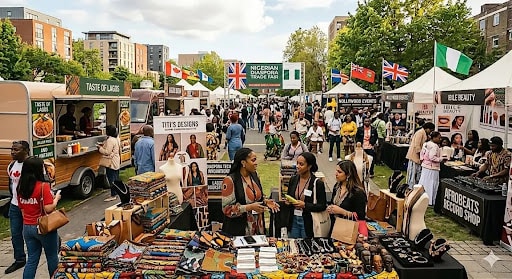
For many Nigerian vendors in the diaspora, trade fairs feel like a major opportunity. Rows of stalls.
High foot traffic. Cultural energy.
A room full of potential clients. But after the event, many vendors walk away with the same frustration: “I was busy but I didn’t actually convert enough clients.” The truth is simple: Trade fairs are not just visibility events. They are structured sales funnels in real life. And vendors who understand this dynamic consistently outperform those who don’t. The difference is not talent. It is strategy, before, during, and after the event.
1. BEFORE THE TRADE FAIR: STRATEGIC POSITIONING
Most vendors prepare products. Successful vendors prepare positioning. Because at a trade fair, attention is limited, vendors with clarity wins.
Define Your Trade Fair Goal
Before anything else, ask: Am I here for brand awareness? Am I here for direct sales? Am I here for bookings (weddings, events, corporate clients)? Am I here to build long-term visibility?
Your goal determines your setup, messaging, and engagement strategy.
Craft a Clear Offer Identity
People don’t buy “services.” They buy clear solutions. Instead of: “I make cakes” Say: “I create custom Nigerian-inspired cakes for weddings, birthdays, and cultural celebrations abroad.” Clarity increases trust instantly.
Build Awareness Before the Event
Don’t wait for the fair to start marketing.
Start early: Announce your participation Show preparation behind the scenes Tease your product or service Invite pre-bookings or appointments By the time people arrive, they should already recognise you.
2. DURING THE TRADE FAIR: TURNING VISIBILITY INTO LEADS
This is where most vendors lose money, not from lack of traffic, but lack of structure.
Your Booth Is a Brand Experience
People don’t just evaluate your product.
They evaluate: Professionalism Presentation Confidence Cultural alignment
Even small details matter: Signage and branding Neat display Coordinated presentation Energy and customer interaction People decide whether they trust you in seconds.
Your Real Goal: Capture Leads, Not Just Sales
A trade fair is not just about selling on the spot. It is about building a lead pipeline.
Always collect: Names Phone numbers Email or social media handles Event dates (if relevant)
Use: QR codes Digital forms Sign-up sheets Because attention without follow-up is lost opportunity.
Prioritise Conversations Over Transactions
Instead of only pitching, ask: What are you planning? When is your event? What style are you going for? This turns visitors into warm leads.
3. AFTER THE TRADE FAIR: WHERE MOST REVENUE IS MADE
This is the most ignored stage and the most profitable. Because trade fairs don’t end when the event ends. They end when your follow-up stops.
Follow Up Within 24–72 Hours
Speed builds recall.
Send: A thank-you message A reminder of your service A reference to your conversation This keeps you top of mind.
Segment Your Leads
Not all leads are equal.
Divide them into: Hot leads → ready to book Warm leads → interested, need nurturing Cold leads → awareness only
Each group requires different communication.
Extend the Event Through Content
Post: Booth highlights Behind-the-scenes content Customer interactions Testimonials or reactions This extends your visibility beyond the physical event.
Create Post-Event Offers
Encourage conversions with: Limited-time discounts Booking incentives Bundled services Free consultations Urgency drives action.
4. WHY MOST VENDORS DON’T CONVERT AFTER TRADE FAIRS
It is rarely about skill.
It is usually about system failure: No lead capture process No structured follow-up No positioning strategy Treating the event as exposure instead of conversion Trade fairs are not exposure moments. They are sales ecosystems.
5. THINK IN A 3-PHASE FUNNEL
Every successful vendor operates like this:
BEFORE
Build awareness and anticipation
DURING
Capture attention and collect leads
AFTER
Convert, nurture, and retain clients This is what turns events into revenue systems.
Final Thoughts: Visibility Alone Does Not Grow a Business
For Nigerian vendors in the diaspora, trade fairs are powerful opportunities but only when approached strategically. The difference between vendors who stay busy and vendors who grow is not talent. It is structure. And structure is what turns visibility into income.
Building a Business in the Diaspora Takes More Than Visibility
Many Nigerian vendors in the diaspora are building incredible businesses, but growth becomes easier when you’re connected to the right community. NDH exists to help Nigerians abroad discover, support, and book trusted Nigerian-owned businesses across categories including food, events, fashion, beauty, professional services, and more. If you’re looking for more ways to put your business in front of the right audience, NDH is helping create those connections every day. Join a growing ecosystem where visibility leads to opportunity and community drives growth.
FAQ: Nigerian Vendors at Diaspora Trade Fairs
1. How do I get more clients at a trade fair as a Nigerian vendor abroad?
Focus on clarity of offer, strong booth presentation, lead collection systems, and structured follow-up after the event.
2. What should I prepare before attending a trade fair?
Prepare your branding, clear service messaging, promotional content, lead capture tools, and pre-event marketing to build awareness.
3. How do I convert trade fair visitors into paying clients?
Engage in meaningful conversations, collect contact details, follow up within 72 hours, and offer time-sensitive incentives.
4. Why do vendors struggle to make sales after trade fairs?
Most vendors fail to follow up, lack lead systems, or treat the event as exposure instead of a structured sales opportunity.
5. What is the most important stage of a trade fair strategy?
The follow-up stage. Most conversions happen after the event, not during it.
6. How do I stand out as a vendor at a diaspora trade fair?
Clear branding, strong storytelling around your service, cultural alignment, and professional presentation help you stand out.