A potential customer discovers your catering business on a business directory.
Your description says you’re a luxury catering company specialising in weddings, corporate events and private dining.
Impressed, they tap through to your Instagram.
Your bio simply reads:
“Food plug 🍲 | Available for orders.”
Suddenly, the experience feels different.
They begin to wonder:
Is this the same business?
Do they actually specialise in luxury events?
What exactly do they offer?
If your business sounds different everywhere customers find you, you’re creating confusion without even realising it.
For catering and food businesses, where trust plays a huge role in booking decisions, consistency isn’t just a branding exercise—it’s part of the customer experience.
Your Customers Rarely Discover You in One Place
Years ago, someone might have found your business through a recommendation and called you immediately.
Today, the journey looks very different.
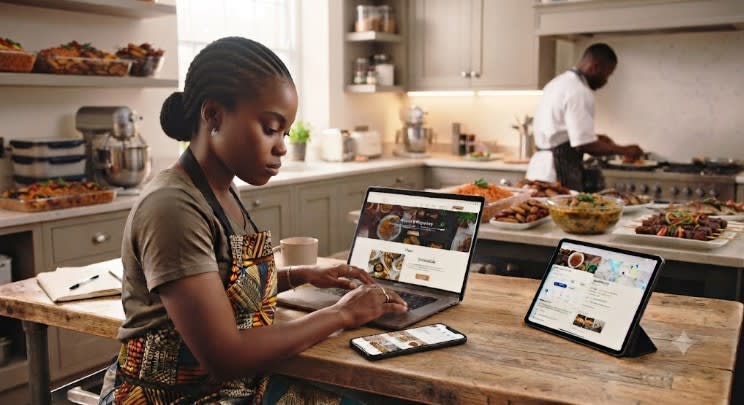
A customer might:
Find your business on NDH.
Search your name on Google.
Visit your Instagram page.
Check your WhatsApp Business profile.
Browse your website.
Read reviews.
Before they send that first message, they’re already comparing everything they see.
Each platform should reinforce the same story about your business, not tell a different one.
Your Brand Message Is More Than a Bio
Many food businesses treat every platform differently.
Their Instagram bio says one thing.
Their website says another.
Their WhatsApp Business profile says something completely different.
The problem isn’t that the wording changes.
The problem is that the positioning changes.
For example:
One platform might describe the business as:
“Dessert Brand.”
Another explains that they specialise in:
Luxury Afro-fusion catering
Bespoke celebration cakes
Weddings
Corporate events
Private dining experiences
Elegant event setups
Both descriptions may be true.
But one gives customers a much clearer understanding of who the business serves and why they should choose it.
That’s the difference between describing what you sell and communicating the value you provide.
Customers Buy More Than Food
People don’t book caterers simply because they cook.
They book them because they want confidence that an important occasion will be handled well.
When someone hires a caterer, they’re often planning:
A wedding
A birthday celebration
A naming ceremony
A graduation
A corporate event
A private dinner
They’re not just buying food.
They’re buying peace of mind.
Presentation.
Reliability.
An experience their guests will remember.
Your messaging should reflect that.
Create One Positioning Statement First
Before updating every platform, create a clear and concise statement that explains your business.
Ask yourself:
Who do we serve?
What do we specialise in?
What makes us different?
For example:
Instead of:
“We cook delicious food.”
Try:
“We help families, couples and businesses create memorable celebrations through premium Nigerian catering, bespoke desserts and beautifully presented dining experiences.”
Notice the difference.
The second statement immediately communicates:
Who the business serves
What it specialises in
The experience customers can expect
Once you’ve crafted that message, every platform should reinforce it.
Where Your Message Should Stay Consistent
Your positioning shouldn’t change depending on where someone finds you.
Review these key touchpoints:
Does your bio clearly explain what you specialise in?
WhatsApp Business
Does your business description match your brand positioning?
Google Business Profile
Does it accurately reflect your services and specialties?
Website
Does your homepage tell the same story as your social media?
NDH Listing
Does your business description immediately communicate your value to potential customers?
Consistency builds familiarity.
Familiarity builds trust.
And trust leads to bookings.
A Quick Brand Message Checklist
Before publishing or updating your profiles, ask yourself:
• Would someone instantly understand what my business specialises in?
• Does every platform similarly describe my business?
• Am I highlighting the occasions I cater for?
• Am I explaining the experience customers can expect, not just the food I prepare?
• Would a first-time visitor know why they should choose my business over another?
If you answered “no” to any of these questions, your messaging may need some work.
Why This Matters on NDH
At Naija Diaspora Hub, we believe great businesses deserve to be understood as clearly as they deserve to be discovered.
That’s why we encourage every food and catering vendor to present a clear, consistent brand message across every platform.
When your messaging aligns, customers spend less time trying to figure out what you do and more time choosing you.
Final Thoughts
Your customers are already comparing your profiles.
The question is:
Are they all telling the same story?
For catering and food businesses, consistency isn’t about using the same words everywhere.
It’s about making sure every platform leaves customers with the same impression of your business.
When people clearly understand who you serve, what you specialise in and why you’re different, they’re more likely to trust you.
And in the catering industry, trust is often what turns a visitor into a booking.
Frequently Asked Questions
Why is brand messaging important for catering businesses?
Clear and consistent brand messaging helps customers quickly understand what your business offers, who you serve and what makes you different. It also builds trust across every platform where customers discover your business.
Should my Instagram bio and website say the same thing?
Not necessarily. The wording can vary, but the message should remain consistent. Customers should come away with the same understanding of your business regardless of where they find you.
What should a catering business include in its brand message?
A strong brand message should explain who you serve, the types of events you specialise in, the services you offer and what makes your business unique.
Why do customers check multiple platforms before booking?
Most customers research businesses before enquiring. They often compare social media, websites, directories and reviews to make sure the business is trustworthy and the services match their needs.