
You packed your winter coat. Your documents. The small bottle of your mother's perfume you took without asking because you knew the scent would matter one day when London felt too cold and too quiet and too far from everything that made sense.
What you could not pack was her.
Nobody warned you about that part. The relatives who celebrated your visa approval did not mention it. The friends who prayed with you at the airport did not say, by the way, there will be a Tuesday, completely ordinary, when your father's name appears on your phone, and something in your chest will tighten before you even answer. Nobody told you that you would learn to carry two versions of yourself. The one building a life out here. And the one that still belongs entirely to home. That weight has a name. The distance tax. And if you are Nigerian and you live abroad, you are already nodding.
It is not the price of your flight.
It is not the cost of the wire transfer or the premium you pay for a small bag of ede at the African shop forty minutes away. Those costs are real, but you budget for them. You move on.
The distance tax is different. It has no invoice. It is paid in missed birthdays and second-hand news and WhatsApp videos of your niece's first steps that someone almost forgot to send. It is paid in the specific guilt of watching your parents age on a four-inch screen. On Sunday afternoons, when homesickness arrives not for a place exactly but for the feeling of being around people who have known you your whole life. People who do not need an explanation for who you are. People who put food in front of you without asking because they already know.
It shows up at a party in your city, the music is right, the jollof is almost right, the aso-ebi is beautiful, and you are genuinely happy. Then someone's mother walks in. The room shifts the way rooms shift when a Nigerian mother enters. And just like that, the distance tax arrives uninvited to a party it was not welcome at.
The birthday you almost got right.
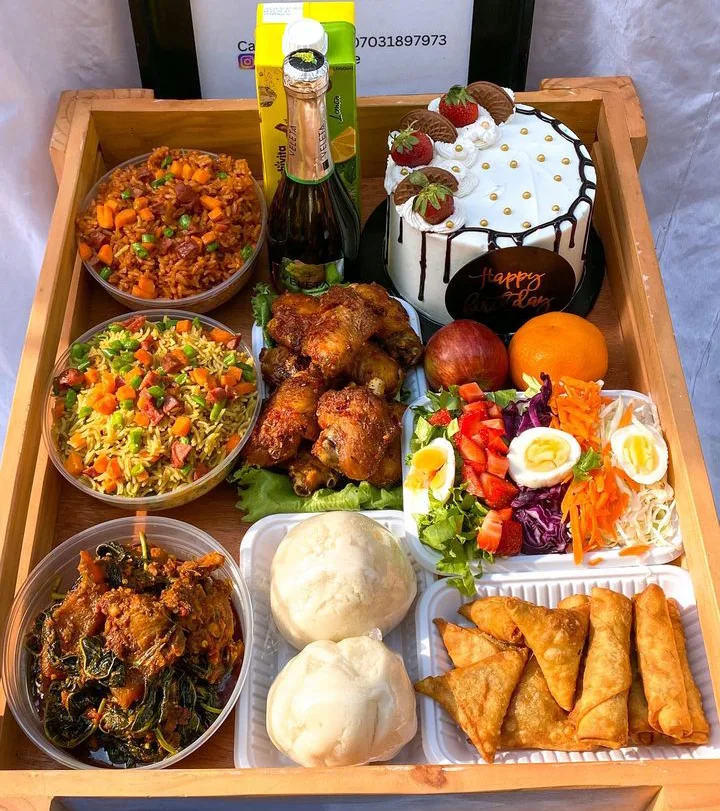
Your father turns sixty. You have known this was coming for a year. The plan was to be there. The flights were too expensive. You decided to send something instead — something real, something that would arrive at his door on the day and say that your daughter in Canada had not forgotten. You call your cousin in Lagos. He will handle it. A week passes. He is busy. You try another cousin. She means well, but your father's birthday is not her priority the way it is yours. You think about calling a bakery directly, but you do not have a reliable contact, and even if you did, coordinating payment from here and delivery from there and making sure they actually write the right thing on the cake, you already know how that ends.
You send money. A generous amount. Enough for a cake and a small celebration. You send it with a voice note full of love, and your father receives it gratefully and tells you not to worry, that you have done more than enough. But you both know it is not the same. The distance tax is collected in full.
The hardest part is that you would do it all again.
The life you have built is real. The opportunities are real. The school fees you pay, the medical bills you cover, the futures you are funding from abroad, none of that is nothing. It is everything. But loving your choice does not mean the cost disappears. The distance tax is real whether you name it or not. It lives in the gap between the life you are building here and the life that is continuing without you there. Between the person you are becoming abroad and the person you still are the moment you step off the plane at Murtala Muhammed, your body remembers everything.
You carry both. You always will.
What diaspora Nigerians want is not complicated. They do not need grand gestures. They need to feel useful from a distance. They need to mark the moments that matter in a way that lands specifically, not a transfer, not a promise, not another cousin who means well. Something real. Something that shows up at a door in Lagos and says I thought about you. I planned this. I made sure you felt me today.
Something is coming to NDH very soon. Built for every diaspora Nigerian who has ever wished they could do more from where they are.
Frequently Asked Questions
What is the distance tax?
It is the emotional cost of building a life far from the people who matter most to you. For Nigerians, it runs deeper because our culture is built on physical presence — showing up is how we say I love you, I respect you, I belong to you. When geography makes that impossible, the gap it leaves is not small.
Does it get easier the longer you live abroad?
You adapt more than you heal. The early years are the loudest. But the moments that hit hardest, a parent's illness, a sibling's wedding, a grandparent's passing, they remind you that time abroad does not make you immune. It just changes how often it collects.
Why is sending money not always enough?
Money solves the practical problem. It does not carry the emotional weight of something chosen, organised and delivered with intention. In a culture where providing specifically for someone is an act of love, there is a real difference between a transfer and a gesture. Nigerians feel that difference deeply.
Why does trying to send things home through family usually fail?
Because your priority is not their priority. The cousin means well. The travelling relative forgets. The money arrives but gets absorbed elsewhere. The gap between what you intended and what actually happened is exactly where the distance tax lives.
What actually helps diaspora Nigerians feel less far from home?
Not closing the distance, that is not always possible. What helps is showing up specifically despite it. A birthday cake with the right words on it. A stocked fridge when someone comes home from the hospital. A meal at a celebration you could not attend.